 English






S1-1: From Movable Type to Gift Box: A Thousand Years of Chinese Printing
Published: 2026-09-02 | Series 1: The Craft (China) | Reading time: 8 minutes
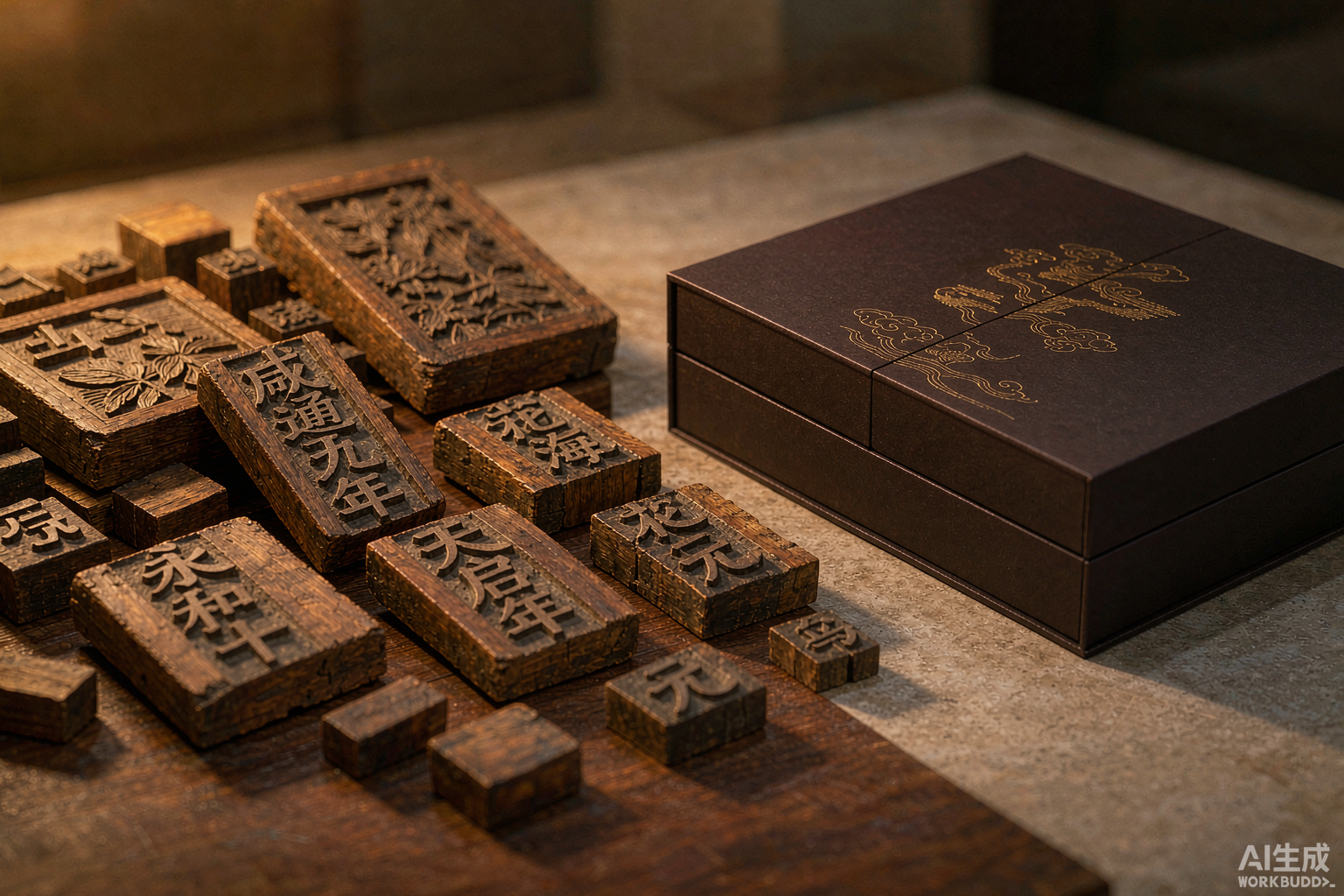
In the year 1041, a commoner named Bi Sheng (毕昇) sat in his workshop in Kaifeng and pressed a single character into a small rectangle of sticky clay. The character was 凸 (tū, "protruding"). It worked. He arranged the clay pieces into a frame, inked the surface, pressed paper against it - and printed. Then he switched a piece, inked again, pressed again. A new character. A new word. A new sentence.
The dynasty was Northern Song. The capital was the largest city in the world - one million people, a hundred thousand shops, a paper industry so vast that Song officials joked they had "fish-scale armor" in their filing cabinets. The government needed to print many copies. Buddhist sutras, civil-service exams, tax registers, salt vouchers, paper money. Woodblock carving was too slow. Hand-copying was too slow. Bi Sheng's clay type was faster. Not fast enough to industrialize, but fast enough to prove the principle: movable, reusable, repeatable.
A century later, another official - Wang Zhen (王祯) of the Yuan dynasty - replaced Bi Sheng's clay with wood. He described the process in Nong Shu (《农书》, Treatise on Agriculture, 1313), including a two-repository rotating type case that allowed a typesetter to access any of more than 60,000 pieces in two arms reach. Still wooden. Still slow. But the idea - the idea that a printed page was a system, not a carving - had arrived.
Gutenberg's press in 1450 used the same idea, but with metal. The West industrialized it. Steam presses, then rotary, then offset, then digital. A page in a magazine in 2026 is not carved, not set, not inked on a press - it is addressed to a plate, calibrated to a substrate, and cured by light or heat. The line from Bi Sheng's clay rectangle to the digital printer on a GBA Pack production line is a thousand years long, and the line is not metaphorical. It is a literal, traceable, technical inheritance.
A box is not a page. But it inherits from one.
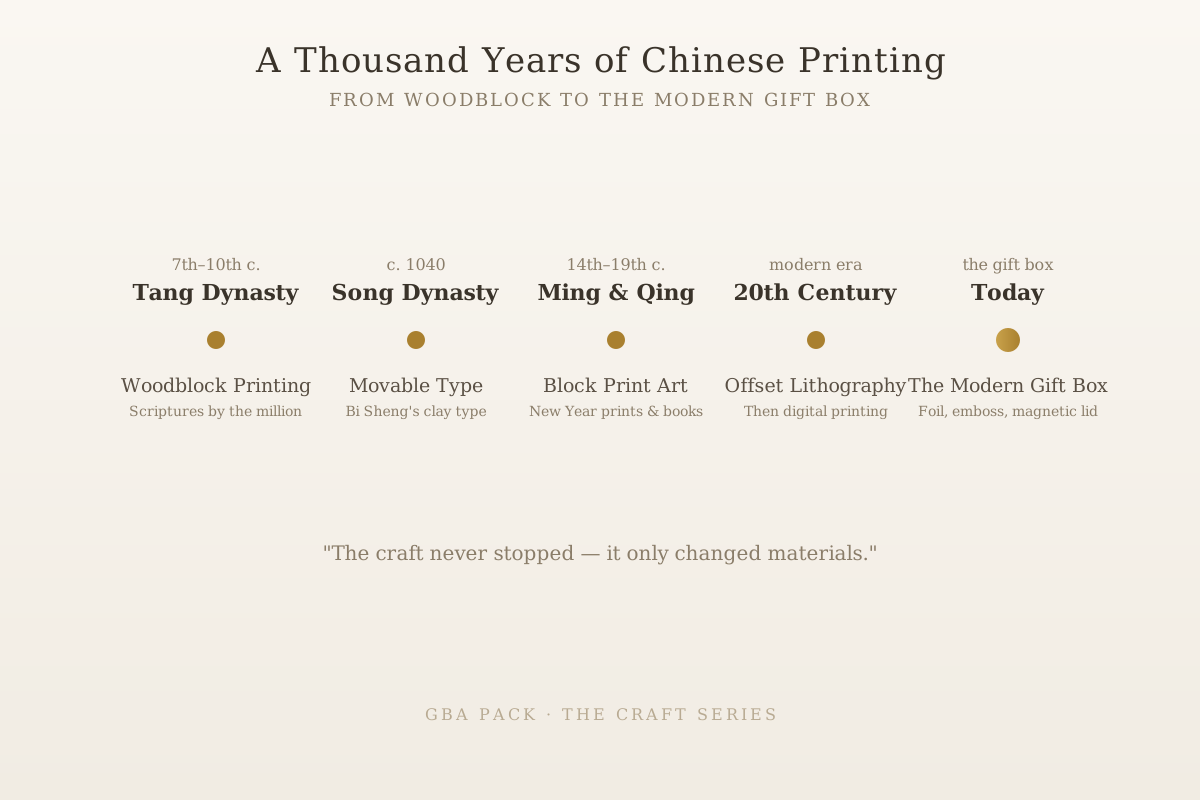
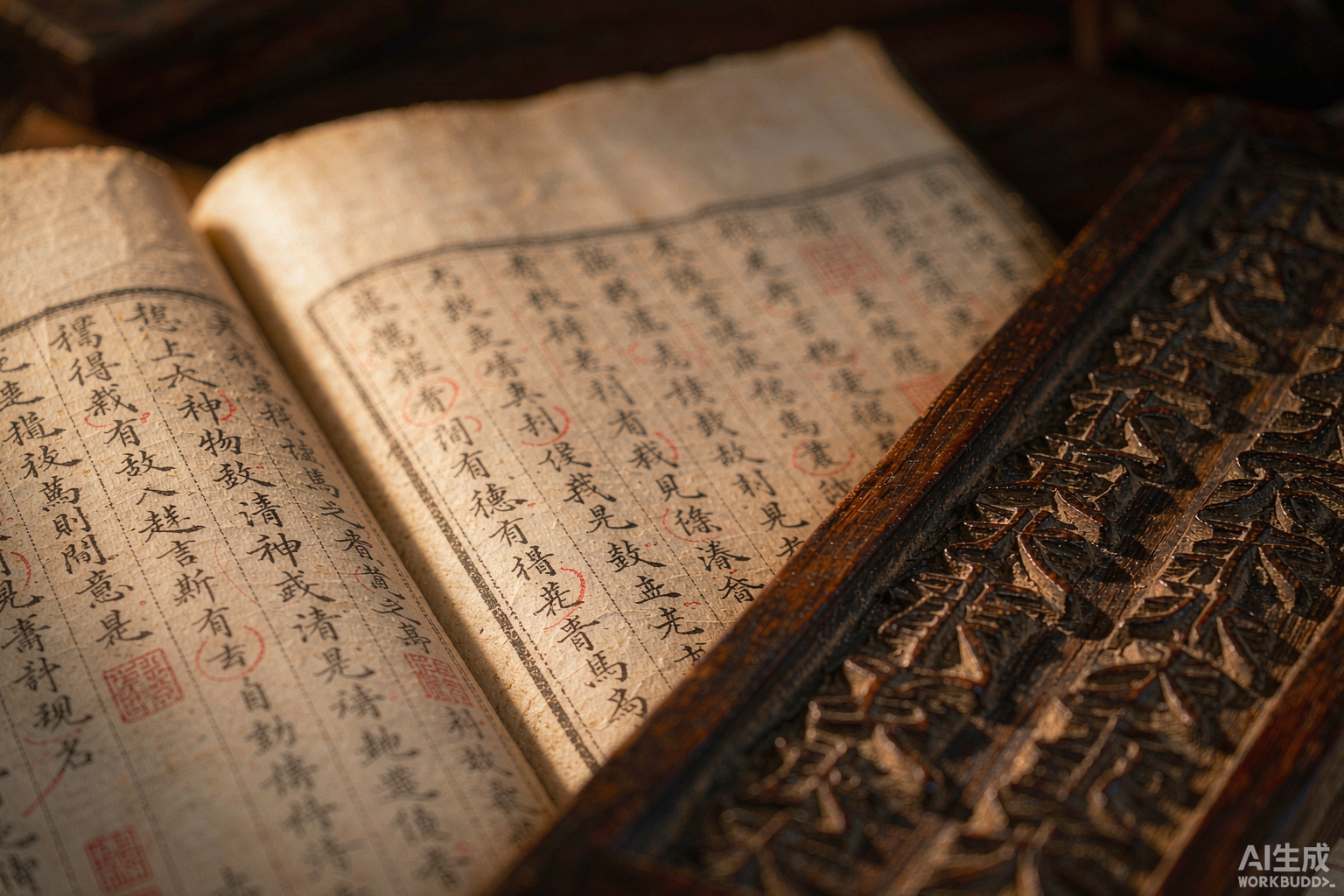
In the West, packaging is a commercial discipline. A box is a vessel for a product. In China, a box is a continuation of a book. The same traditions of paper, ink, stamping, and folding that made The Diamond Sutra (868 CE, the world's oldest dated printed book) into a physical object also made the gift box, the pastry box, the tea tin, the moon-cake box, the wedding-gift box. The same paper-folding technique, the same ink-rubbing, the same stamping for prestige, the same calligraphy of li (礼) - propriety, ritual, gift.
When a GBA Pack customer in Jakarta or Riyadh opens a drawer box, the drawer slides. That sliding motion - the friction, the sound, the resistance-then-release - is a paper mechanic. The paper is wrapped tight. The friction coefficient is tuned. A specialist decides on Monday morning how the box will feel on Friday afternoon in a hotel room in Mecca. That decision is descended from Bi Sheng's principle: a printed surface is something you can make again, and again, and again. The box is a printed surface, just bent into a shape.
Three things the Chinese printing tradition gives a modern packaging engineer
First, the discipline of the unprinted margin. A Song-dynasty printer was taught to set the type with white space - the tian (田) field - as carefully as the black. A GBA Pack engineer who lays out a box dieline in 2026 works the same way. The zhe (折), the fold, has to be specified with the same care the Song official gave to the columns of a civil-service exam form. Two millimeters of misalignment in the fold means a box that jams on the production line, or a customer whose lid sits a quarter-millimeter proud, or a hinge whose friction has changed in transit. The Song printer who got this wrong lost face. The GBA Pack engineer who gets it wrong gets a complaint.
Second, the patience of the sample. When a Song-dynasty edition was commissioned, the publisher would print a run of 50 copies and carry them, by hand, on foot, from Kaifeng to the regional capital for review. Two weeks of travel. A thousand years later, a GBA Pack sample ships by air to Dubai, or by sea to Jakarta, and arrives in seven to ten days. The principle is the same: print a run, carry it, see what a human thinks, adjust, re-print. We hold samples for two years so that reorder number four matches reorder number one. The first run was a hand-carried draft. The forty-eighth is the locked specification.
Third, the inheritance of the seal. The Chinese red seal (印章, yìnzhāng) is a stamp. The red of cinnabar paste. The seal authenticates a document. A printed document without a seal is not yet real. When we stamp a box - when the inner pad is printed with the maker's mark, the edition number, the batch code, the FSC stamp, the Halal mark - we are doing the same gesture. We are saying: this object is not anonymous. It was made. It was signed. The seal is a 1,000-year-old technology that the global packaging industry still uses every day, in cinnabar red, on a million gift boxes.
Why this matters for your next box
A box is not just a way to carry a product. It is a way to carry an idea of the product. A perfume is a fragrance; a boxed perfume is a fragrance with a beginning, a middle, and a return - a tasting, almost. A 12-year-old single malt is a liquid; a 12-year-old single malt in a wooden box with a leather hinge is a story about a 12-year-old single malt. The box is the grammar of the story.
When you ask GBA Pack to make a box, you are asking us to carry your story for a thousand years, in the sense that the box - as an object - is descended from a thousand-year tradition of carrying meaning in paper. The tradition is not nostalgic. It is practical. The same paper, the same folding, the same stamping, the same patience. Only the materials have changed, and only because the new materials are better at what they do.
We are not the oldest box factory in China. We are one of the youngest, in a city that has been making boxes for thirty years, in a region that has been making paper for a thousand years, on a continent that has been folding meaning into a square for a hundred centuries.
The box on the shelf in Dubai is a small object, the size of a hand. But it is a recent surface in a very old line. The line goes back to the Diamond Sutra, and further. The line passes through the Song dynasty, the Yuan, the Ming, the Qing, the treaty ports, the manufacturing belt, the air freight, the great-region cluster you are now reading about. The line ends, for now, in Dongguan. And you, in your product, are the latest sentence in that line.
If a box is a sentence - and we think it is - what sentence would you like yours to be?
A small, practical footnote
If you are designing a box for a new product this quarter, two things are worth doing.
First, ask the engineer to see the unprinted side of the substrate - the side the customer does not see. The print is what we show. The unprinted side is what the box is. A board with a clean, dense, flat inside is a board that will fold precisely, hinge cleanly, and survive a long freight.
Second, ask for a sample in a second substrate, even if it costs more. A second sample is not a second guess; it is a second conversation with the material. Two substrates will tell you different things. A third will tell you something you didn't know.
We keep the first sample for two years. If you reorder, the first sample is the conversation we had with the material. We are still having it.
- GBA Pack, Dongguan, 2026-09-02
What we make
- Rigid drawer boxes with magnetic closure, grosgrain pull, velvet or suede lining
- Magnetic-lid boxes with a hinge that seats with a whisper rather than a click
- Lid-and-base shoulder boxes with ribbon-pull
- Lids in specialty paper, foil, suede, or silk
- FSC-certified board, food-grade inks, BPJPH Halal options
Lead times
- Digital mock-up in 48 hours
- Physical sample in 7-10 days
- Mass production in 20-25 days after approval
- Sea freight to Jebel Ali in 16 days, to Ho Chi Minh in 6, to Tanjung Priok in 12
Working with us
We reply in four working hours, in English, Indonesian, or Arabic, on WhatsApp. If you have a box in mind, we are at the other end of +86 138 0000 0000.
Tags: gift box, Chinese printing, movable type, packaging tradition, FSC, BPJPH Halal, Indonesia, UAE, B2B packaging, GBA Pack, Dongguan
Series: The Craft - S1-1
Next: S1-2 - A Paper's Journey: From Cai Lun to Specialty Paper